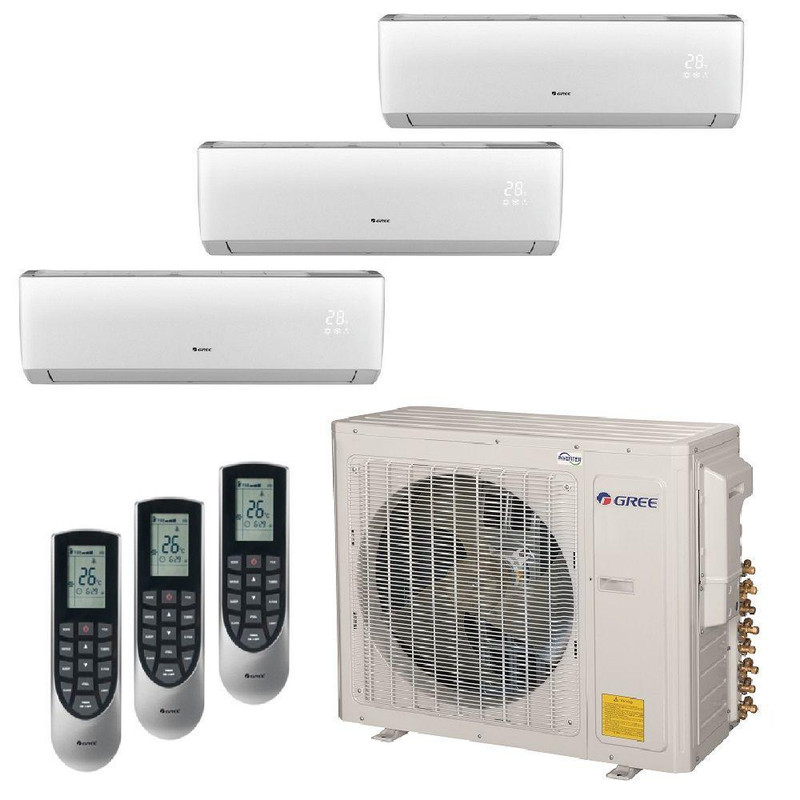
Central air conditioners flow cool air through a system of supply and return ducts. Supply ducts and signs up (i.e., openings in the walls, floors, or ceilings covered by grills) bring cooled air from the a/c unit to the home. This cooled air ends up being warmer as it circulates through the house; then it recedes to the central air conditioning conditioner through return ducts and registers.
A/c unit assist to dehumidify the inbound air, but in very damp climates or in cases where the air conditioning unit is large, it might not accomplish a low humidity. Running a dehumidifier in your air conditioned home will increase your energy use, both for the dehumidifier itself and because the a/c will need more energy to cool your house. A more effective alternative is a dehumidifying heat pipeline, which can be added as a retrofit to the majority of existing systems.
If you have a central air system in your home, set the fan to turn off at the same time as the compressor, which is usually done by setting the "car" mode on the fan setting. In other words, do not utilize the system's central fan to offer air circulation-- use flowing fans in private spaces.
Kinds Of Central Air Conditioning Conditioners
A main air conditioner is either a split-system unit or a packaged unit.
In a split-system central air conditioning conditioner, an outdoor metal cabinet contains the condenser and compressor, and an indoor cabinet includes the evaporator. In many split-system a/c, this indoor cabinet likewise contains a heating system or the indoor part of a heat pump. The air conditioning unit's evaporator coil is set up in the cabinet or main supply duct of this furnace or heat pump. If your home already has a heater however no air conditioning unit, a split-system is the most economical main air conditioner to set up.
In a packaged main air conditioner, the evaporator, condenser, and compressor are all located in one cabinet, which usually is put on a roofing or on a concrete piece beside your house's structure. This kind of a/c also is used in small commercial structures. Air supply and return ducts originate from inside through the house's exterior wall or roofing to get in touch with the packaged ac system, which is normally situated outdoors. Packaged air conditioning unit typically consist of electrical heating coils or a gas heater. This mix of air conditioning unit and central heating unit eliminates the need for a separate furnace inside.
Choosing or Updating Your Central Air Conditioner
Central air conditioners are more efficient than space air conditioning system. In addition, they run out the method, peaceful, and hassle-free to operate. To save energy and cash, you must try to buy an energy-efficient air conditioning unit and minimize your central air conditioning conditioner's energy usage. In an average air-conditioned house, a/c takes in more than 2,000 kilowatt-hours of electrical energy annually, causing power plants to give off about 3,500 pounds of co2 and 31 pounds of sulfur air conditioning specialists near me dioxide.
If you are thinking about adding central air to your home, the deciding factor might be air conditioning installers near me the need for ductwork.
If you have an older central air conditioner, you might pick to change the outdoor compressor with a modern-day, high-efficiency system. If you do so, speak with a local heating and cooling contractor to ensure that the new compressor is correctly matched to the indoor unit. Nevertheless, considering recent modifications in refrigerants and cooling styles, it might be smarter to replace the entire system.
Today's finest air conditioning system utilize 30% to 50% less energy to produce the same amount of cooling as air conditioners made in the mid 1970s. Even if your air conditioner is only 10 years old, you may save 20% to 40% of your cooling energy expenses by replacing it with a more recent, more efficient model.
Proper sizing and setup are key components in figuring out a/c unit efficiency. Too big an unit will not properly eliminate humidity. Too small a system will not be able to obtain a comfy temperature level on the most popular days. Incorrect unit area, lack of insulation, and inappropriate duct setup can significantly diminish efficiency.
When purchasing an ac system, try to find a model with a high performance. Central air conditioning conditioners are rated according to their seasonal energy effectiveness ratio (SEER). SEER indicates the relative amount of energy needed to supply a specific cooling output. Numerous older systems have SEER scores of 6 or less.
If your a/c is old, think about buying an energy-efficient model. Look for the ENERGY STAR ® and EnergyGuide labels-- certified main units are about 15% more efficient than basic designs. New domestic central air conditioner standards entered into result on January 1, 2015; see the effectiveness standards for central air conditioners for details, and think about buying a system with a higher SEER than the minimum for higher savings.
The standards do not need you to change your existing central air units, and replacement parts and services ought to still be available for your home's systems. The "life expectancy" of a main air conditioner is about 15 to 20 years. Producers typically continue to support existing equipment by making replacement parts offered and honouring upkeep agreements after the new standard goes into result.
Other functions to look for when buying an air conditioning unit include:
- A thermal growth valve and a high-temperature ranking (EER) higher than 11.6, for high-efficiency operation when the weather is at its hottest
- A variable speed air handler for brand-new ventilation systems
- An unit that runs quietly
- A fan-only switch, so you can use the unit for nighttime ventilation to considerably lower air-conditioning expenses
- A filter check light to remind you to examine the filter after a predetermined number of running hours
- An automatic-delay fan switch to switch off the fan a few minutes after the compressor turns off.
Setup and Place of Air Conditioners
If your air conditioner is installed properly, or if significant installation issues are found and repaired, it will perform effectively for several years with only small regular maintenance. Nevertheless, numerous air conditioning unit are not installed correctly. As a regrettable outcome, modern energy-efficient ac system can carry out practically as improperly as older inefficient designs.
When setting up a new central air system, be sure that your specialist:
- Permits sufficient indoor area for the installation, upkeep, and repair of the brand-new system, and sets up an access door in the furnace or duct to offer a way to clean up the evaporator coil
- Uses a duct-sizing method such as the A/c Contractors of America (ACCA) Manual D.
- Ensures there are enough provide registers to deliver cool air and sufficient return air registers to bring warm home air back to the air conditioner.
- Installs duct within the conditioned area, not in the attic, wherever possible.
- Seals all ducts with duct mastic and greatly insulates attic ducts.
- Locates the condensing unit where its noise will not keep you or your neighbours awake during the night, if possible.
- Locates the condensing system where no nearby objects will obstruct airflow to it.
- Verifies that the newly installed air conditioning system has the specific refrigerant charge and air flow rate defined by the manufacturer.
- Locates the thermostat far from heat sources, such as windows or supply signs up.
If you are changing an older or failed split system, make certain that the evaporator coil is replaced with a brand-new one that exactly matches the condenser coil in the new condensing unit. (The a/c's efficiency will likely not enhance if the existing evaporator coil is left in location; in reality, the old coil could cause the new compressor to stop working prematurely.).